Electronic music is a $15.1 billion industry, here's what that means if you're an independent artist

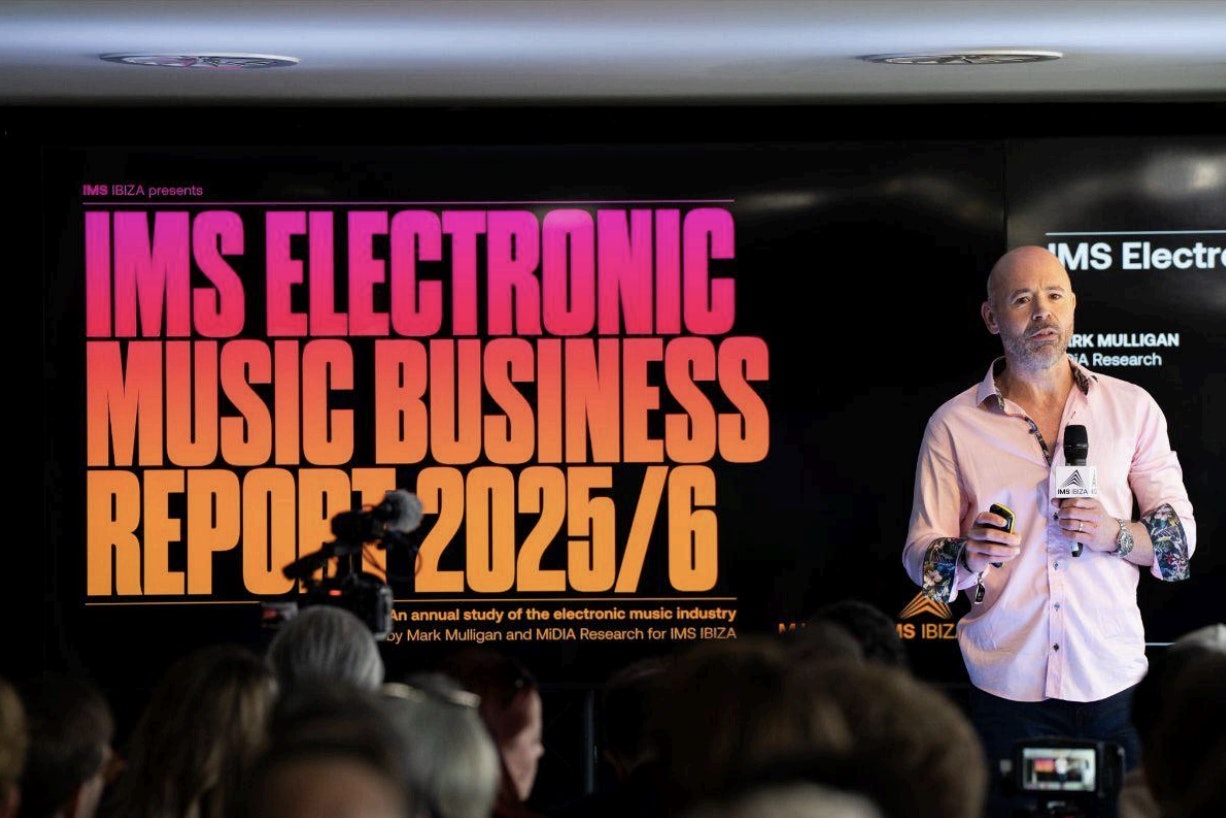
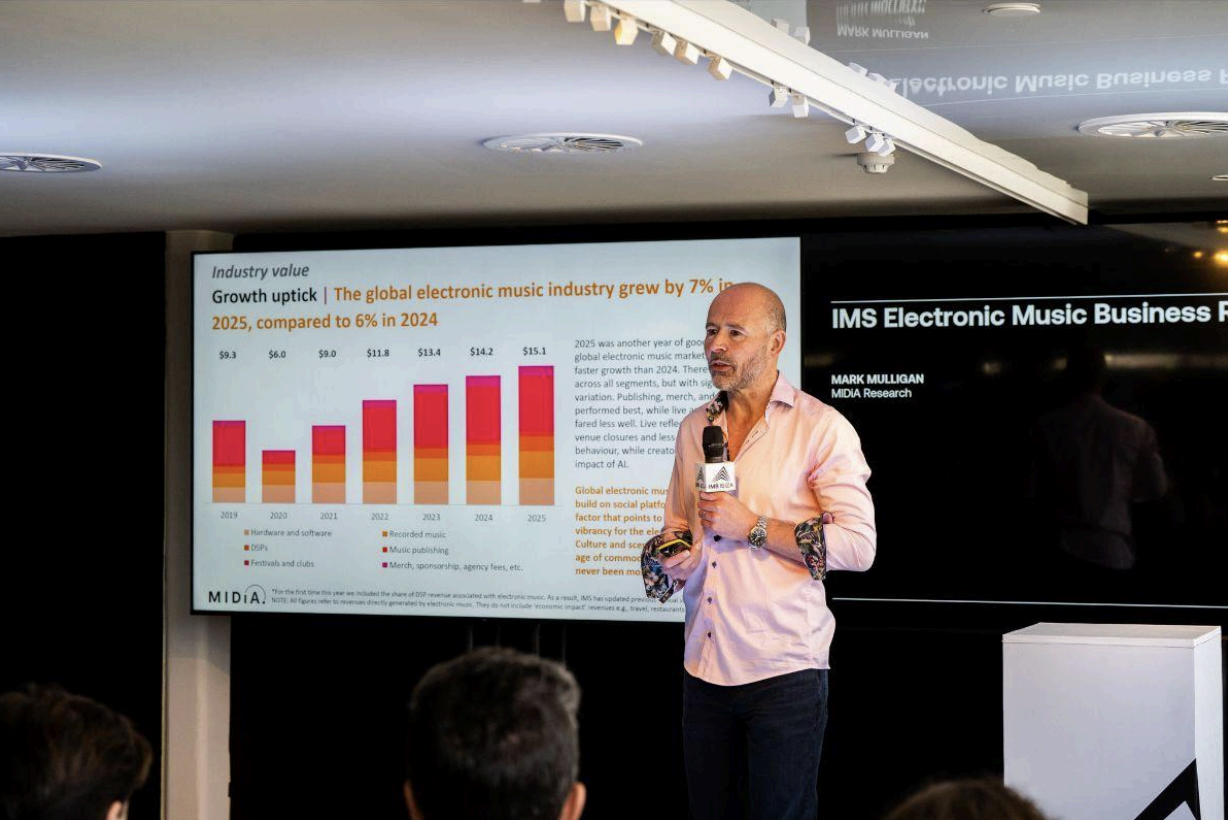
Last week at IMS Ibiza, MIDiA Research's Mark Mulligan presented the annual Electronic Music Business Report. The industry grew 7% in 2025. Most of the findings are aimed at labels and investors, but a few of them matter directly to independent artists.
Publishing revenues grew faster than streaming in 2025
Recorded music revenues grew by 9% last year, but publishing revenues outpaced them at 11%. Publishing covers the money generated when your compositions are played, licensed, or used commercially, separate from the master recording revenue you earn on Spotify or Apple Music.
For independent artists who write and produce their own material, this is often uncollected revenue. Registering with a Performing Rights Organisation (PRO) is straightforward: ASCAP or BMI in the US, PRS in the UK, SACEM in France. Once registered, every sync placement, every DJ set in a licensed venue, and every stream on a licensed platform generates money that reaches you directly. Distributors like DistroKid and TuneCore both offer publishing administration add-ons that handle collection across territories automatically.
TikTok and SoundCloud are the top discovery platforms for electronic music
The report names TikTok and SoundCloud specifically as the leading engines for electronic music discovery, with hashtags and scenes growing at pace on both. Electronic music's visual and performance-led nature translates well into short-form environments, and communities on both platforms are actively driving listeners toward new artists.
SoundCloud in particular functions differently from major DSPs. Discovery is community-driven, and reposts from active accounts in your genre still move the needle in ways that algorithmic playlisting doesn't replicate. For electronic artists, staying active there alongside your major DSP releases is worth factoring into your rollout strategy.
Afro House is one of the fastest-growing genres on production platforms
Tech House held its position as the top-selling genre on Beatport for another consecutive year. But Afro House emerged as one of the most dynamic growth areas in 2025, rising rapidly across Splice and other creator platforms. It reflects a broader shift toward globally influenced, hybrid sounds, one that's visible in the sample packs and presets gaining traction on the platforms many producers already use daily.
18% of all catalogue acquisitions in 2025 were for electronic artists
Investors are increasingly focused on newer electronic music catalogues, drawn by long-term streaming upside and younger fanbases. While catalogue sales are typically the concern of more established artists, it's a useful reminder that the music you're releasing now has long-term value. Keeping your metadata clean, your ownership documented, and your publishing registered from the start puts you in a stronger position down the line.
AI will be disruptive, but electronic music is used to adapting
The report addresses AI directly. IMS co-founder Ben Turner acknowledged the disruption ahead, but framed it in context:
“Electronic music was built on new technology and on a willingness to move with it. That instinct still runs through the culture today.”
For independent artists, the practical question is less about taking a position on AI and more about staying engaged with how your existing tools are evolving. DAW plugins and production platforms are increasingly integrating AI-assisted features, and understanding what they do and whether they fit your workflow is part of staying current as a producer.
Beyond these specific findings, the broader picture is one of a genre in good health. Electronic music added 0.6 billion new fans across platforms in 2025 and now ranks as a top three genre in nearly all of its leading markets. As Mark Mulligan of MIDiA Research noted, the escapist role of the dancefloor has never been more important,and the numbers back that up.
